
How to Use a Spin Wheel for Instagram Giveaways (Free & Fair)
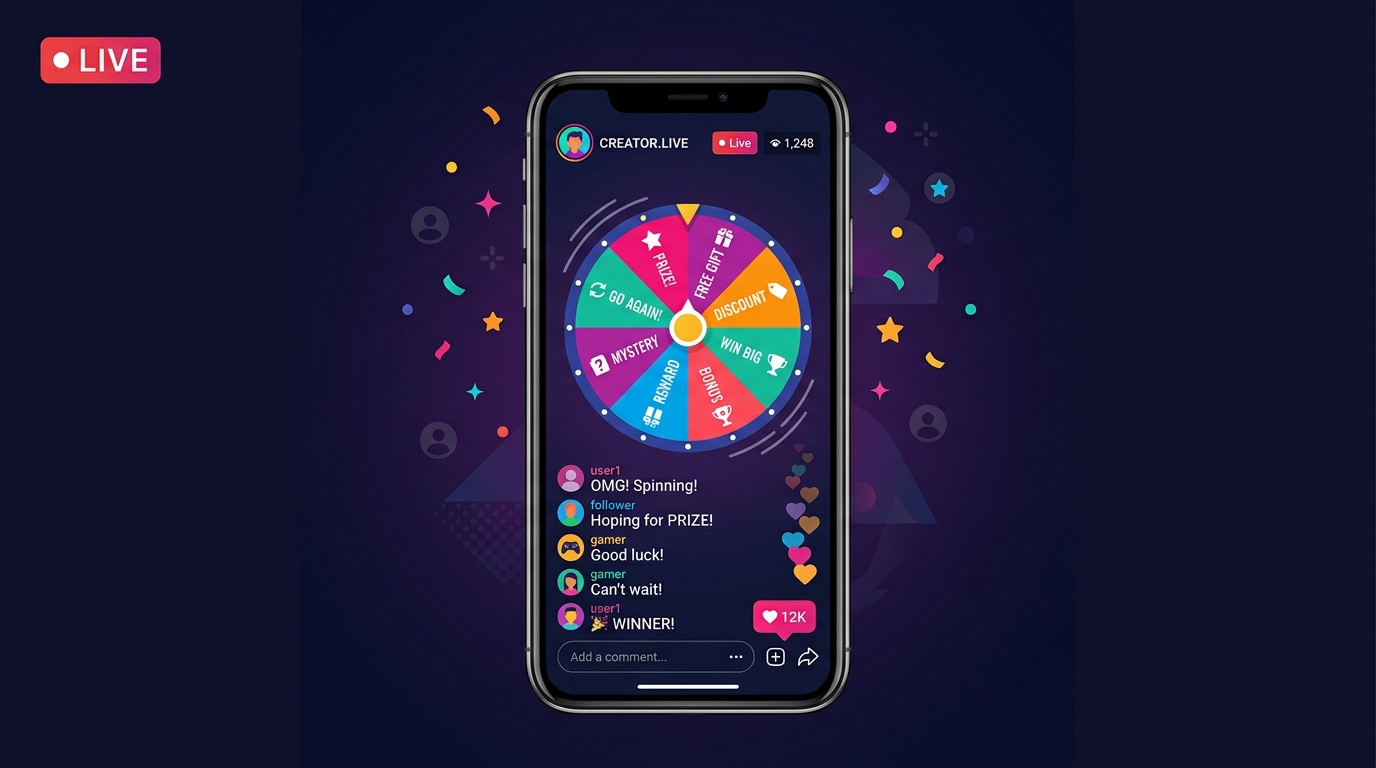
Running an Instagram giveaway is one of the cheapest ways to grow engagement and reward the people already following you. The hard part isn’t the prize — it’s the moment you pick a winner. Announce a name with no visible process and a portion of your audience will quietly assume you picked a friend.
A spin wheel solves that, because the draw becomes something people watch rather than something they’re told about afterwards.
Why a wheel beats a “random winner” announcement
- The process is visible. Every entrant can see their name on the wheel before it spins. That is the entire trust argument, and no amount of “we picked fairly!” copy replaces it.
- It’s built for suspense. A slowing wheel is genuinely good content for a Reel or a live stream. The draw becomes a second engagement moment rather than an administrative footnote.
- Nothing to install. No app permissions, no account connection, no subscription. You paste a list and spin.
Step by step
1. Export your entries
Use a comment exporter to pull the usernames that entered. If your entry mechanic was a comment (“tag a friend”), you want the comment list; if it was likes or follows, you’ll need the corresponding export.
Check what you’re handing to a third-party exporter. Anything asking for your Instagram password rather than an official login is not worth the risk of the account you’re running the giveaway on.
2. Filter against your published rules
This is the step people skip, and it’s the one that causes disputes. Work through the list and remove:
- Duplicates, unless your rules explicitly allowed multiple entries. If they did, leave the repeats in — that’s the entrant’s earned extra chance, and stripping them would be the actual unfairness.
- Entries outside the window. Anything posted before the start or after the close.
- Entrants who missed a requirement — didn’t follow, didn’t tag, tagged themselves, tagged a business account if you excluded those.
- Ineligible locations, if your prize can’t ship somewhere or your rules set a region.
- Obvious giveaway-farming accounts, if your rules mentioned them. If they didn’t, you can’t remove them now — add the clause next time.
Save this filtered list. It’s your record of who was actually in the draw.
3. Paste into the wheel
Go to the spin wheel and paste the usernames straight into the entries box, one per line. The wheel rebuilds itself around the list.
With a few hundred entries the individual labels get small on screen — that’s expected and doesn’t affect the draw. If you want the names readable on camera for a large giveaway, run a two-stage draw: shuffle the full list with the list randomizer, take the top 20 as visible finalists, and spin the wheel on those. State that you’re doing this beforehand so the two stages don’t look like a re-draw.
4. Spin
Hit spin. One name, one result.
Picking more than one winner? Turn on winner removal so each spin draws from the remaining names and nobody wins twice. Decide your runner-up policy before you start too — if a winner doesn’t claim within your deadline, are you spinning again from the original list or moving to the next name drawn? Say which, in advance.
Recording the draw
If you aren’t going live, screen-record the whole thing: the list going in, the spin, the result. Post it to Stories or as a Reel alongside the winner announcement.
Record continuously from list to result. A clip that starts mid-spin proves nothing, because the interesting question was always what was on the wheel beforehand. One unbroken take answers it.
Keep the recording and the filtered entry list for as long as your rules say you’ll hold winner details — a month is a reasonable default. If someone questions the draw, you have it.
Your rules do the real work
A random draw is only as fair as the list it draws from, and the list is only defensible if the rules were published first. Before entries open, write down:
- opening and closing times, with a time zone;
- who is eligible — minimum age, countries, whether business accounts count;
- what counts as a valid entry, and whether multiple entries are allowed;
- how many winners there are and how they’ll be contacted;
- the claim deadline and what happens if it passes;
- that the giveaway isn’t sponsored by or associated with Instagram.
That last line is a Meta promotion-guidelines requirement, and it’s the one most small accounts miss. Depending on where you and your entrants are, prize draws may also carry local legal requirements around eligibility, prize disclosure, or registration. A picker chooses a name; it doesn’t make a non-compliant promotion compliant. Check the rules that apply to you.
Common ways giveaways go wrong
Changing the rules mid-way. If you add a requirement after entries opened, it can’t apply retroactively to people who entered under the old terms.
Re-spinning because you didn’t like the result. If the first name drawn was ineligible under published rules, remove them and say why. If they were eligible, that’s your winner.
Announcing before verifying. Check the drawn account meets your requirements before you post the name. Retracting a winner publicly is far worse than a short delay.
No record of entries. Without the filtered list, you can’t answer a challenge months later. Export it, don’t rely on the post.
After the draw
Announce the winner where you announced the giveaway, tag them, and post the recording. Then thank the people who didn’t win — a follow-up offer or a note about the next draw converts a disappointed entrant into someone who enters again.
If you run giveaways regularly, keep the wheel workflow the same every time. Consistency is what makes the process feel like a policy rather than a decision you made in the moment.